


UNESCO Temple & Heritage Tour packages
UNESCO Temple & Heritage Tour Packages
Discover India’s Glorious Past with Journey Makers Tours & Travels
India is a land
where history and spirituality come alive in the form of majestic temples, ancient monuments, and timeless architecture. At Journey Makers Tours & Travels, we bring you specially curated UNESCO Temple & Heritage Tour Packages that take you on a journey through the country’s most iconic World Heritage Sites.
From the magnificent Chola temples of Tamil Nadu to the sun-kissed Konark Temple of Odisha, our packages are designed for travelers who seek cultural richness, spiritual depth, and architectural brilliance.
Popular UNESCO Temple & Heritage Destinations Covered
Great Living Chola Temples – Tamil Nadu
-
Brihadeeswarar Temple, Thanjavur
-
Gangaikonda Cholapuram
-
Airavatesvara Temple, Darasuram
Witness the architectural brilliance of the Chola dynasty — grand towers, intricate carvings, and sacred energy that still flows through these timeless shrines.
UNESCO Temple & Heritage Tour packages
Chennai: The starting point for most tours.
Mahabalipuram:
A UNESCO World Heritage Centre featuring temples like The Shore Temple and The Pancha Rathas.
Pondycherry :
French heritage and coastal views
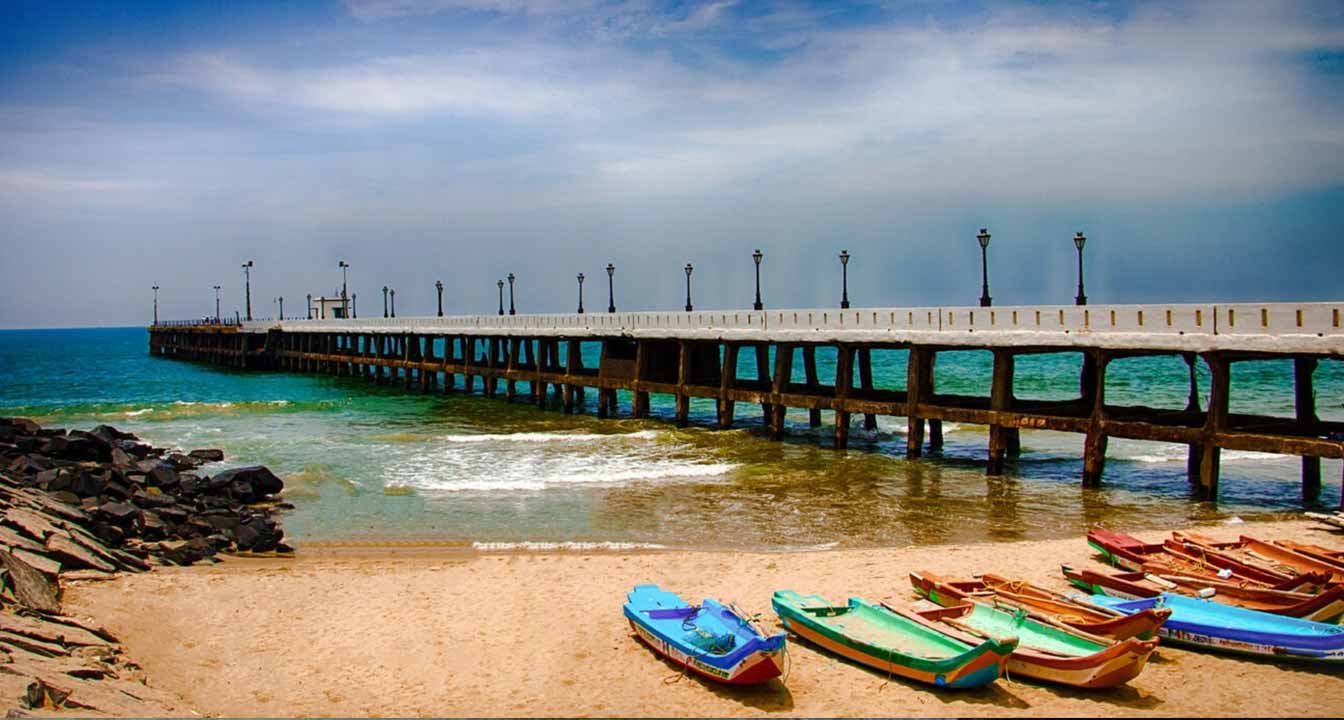
Explore the French Quarter (White Town), including the French War Memorial, Bharathi Park, and the Gandhi Statue along the Promenade.
Visit the Sri Aurobindo Ashram and the nearby Manakula Vinayagar Temple.
Enjoy a leisurely walk along Rock Beach and have dinner at a sea-facing restaurant.
Auroville and beach hopping
Take a trip to Auroville. Pre-book your entry to see the Matrimandir (inner chamber visits require advance booking).
Relax at Serenity Beach or take a surfing lesson.
Have a relaxed dinner at a café in Auroville or back in White Town.
Water sports and museums
Visit the Chunnambar Boat House and take a ferry to the secludedMorning: Visit the Chunnambar Boat House and take a ferry to the secluded Paradise Beach for swimming and relaxing.
Head to the Puducherry Museum to see its collection of ancient artifacts or visit the Basilica of the Sacred Heart of Jesus.
Senji Fort, also known as Gingee Fort, is a historic fortress in Tamil Nadu, India, celebrated for its impregnability and often called the "Troy of the East". Perched on hills, it consists of three distinct citadels built by successive powers over 1,000 years, serving as a strategic capital and enduring military structure with self-sufficient resources like granaries and tanks. The fort complex includes the elevated Rajigiri fort, a Kalyan Mahal, and is a popular tourist destination with a challenging climb and panoramic views.
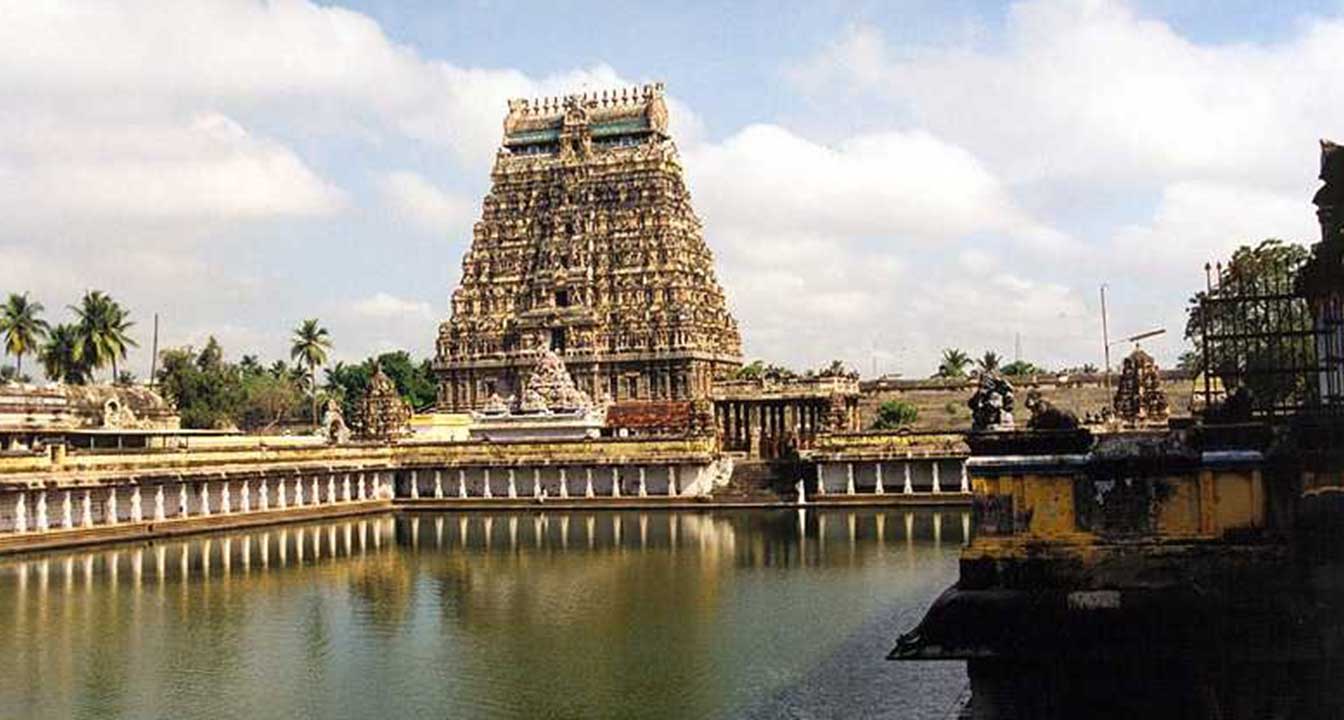
Chidambaram thillai nataraja temple
The Thillai Nataraja Temple in Chidambaram, Tamil Nadu, is an ancient and revered Hindu temple dedicated to Lord Shiva in his dancing form, known as Nataraja. The temple, originally surrounded by a forest of thillai mangrove trees, is a marvel of Dravidian architecture and is celebrated for its deep spiritual and artistic significance.: A Shiva shrine existed on this site when the town was known as Thillai. The temple's modern form largely dates back to the 10th century under the Chola dynasty, who regarded Lord Nataraja as their family deity
Gangaikonda Cholapuram is a historic city and UNESCO World Heritage site in Tamil Nadu, famous for its magnificent Brihadisvara Temple. Built by the Chola emperor Rajendra I in the 11th century, it served as the Chola capital for about 250 years. The city was established to commemorate Rajendra I's military triumph, where his army marched to the Gangetic plains and brought back water from the sacred River Ganges. The name Gangaikonda Cholapuram means "the city of the Chola who conquered the Ganges".
Tharangambadi
Tharangambadi, formerly known as Tranquebar, is a coastal town in the Mayiladuthurai district of Tamil Nadu. It is famous for its history as a 17th-century Danish settlement on the Coromandel Coast. The name Tharangambadi means "land of the singing waves" in Tamil.
Dharasuram
Dharasuram, also known as Darasuram, is a neighborhood near the city of Kumbakonam in the Indian state of Tamil Nadu. It is famous for the Airavatesvara Temple, a UNESCO World Heritage Site and a masterpiece of Chola architecture.
Tanjore
Architectural marvels
Brihadeeswarar Temple: This 11th-century temple, a UNESCO World Heritage site, is the most famous landmark in the city. Built by the Chola king Rajaraja I, it is celebrated for its imposing scale, intricate carvings, and towering vimana (tower).
Other Chola temples: Thanjavur and its surrounding areas are home to other "Great Living Chola Temples" that are also UNESCO World Heritage sites, including the Airavatesvara Temple.
Thanjavur Maratha Palace: Originally built by the Nayaks and later expanded by the Marathas, this complex includes the Saraswathi Mahal Library and the Thanjavur Art Gallery.
Saraswathi Mahal Library: Located within the Maratha Palace, this is one of Asia's oldest libraries. It houses a rare collection of manuscripts written on palm leaves.
Art and culture
Tanjore paintings: The city is renowned for the unique Thanjavur painting style, which originated during the Chola rule. These iconic paintings depict Hindu gods and goddesses with vibrant colors, intricate details, and gold foil embellishments.
Classical music and dance: Thanjavur has been a cultural hub for classical music and dance, including the Bharatanatyam form.
Handicrafts: The city is known for its exquisite handicrafts, such as bronze icons, bell-metal castings, and musical instruments.
Chettinad
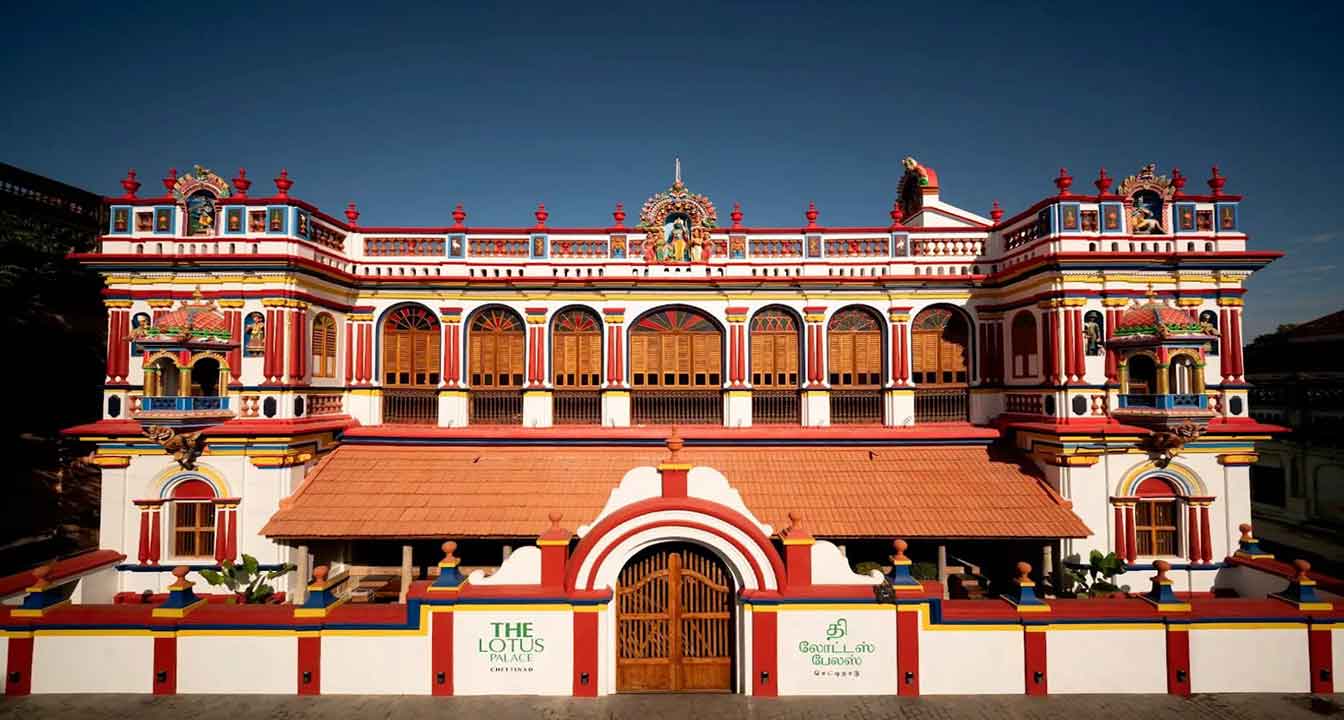
Chettinad Palace (Kanadukathan Palace): Located in the heart of Kanadukathan, this 1912 palace was built by Raja Sir Annamalai Chettiar, founder of Indian Bank. Its grand architecture is a mix of indigenous Chettinad style with European influences and features intricate woodwork, Italian marbles, and colorful tiles.
Chettinadu Mansion: An over 100-year-old mansion in Kanadukathan, this heritage property has been converted into a resort, allowing guests to experience the architectural grandeur firsthand. It features Burma teak, stained glass, and Italian marble.
Athangudi Palace: This elaborate mansion, also known as Sri Letchmi Vilas, was built in 1929 by a wealthy trader and is known for its intricate details and extensive use of handcrafted Athangudi tiles.
Taste authentic Chettinad food: Famous for its aromatic spices and bold flavors, the region offers dishes like Chettinad chicken curry, mutton kolambu, and a variety of sweet and savory snacks. Many heritage hotels and resorts offer cooking demonstrations and traditional meals served on banana leaves.
Artisanal crafts
Athangudi tile factory: Witness the traditional, handmade process of creating the region's signature eco-friendly mosaic tiles. The technique uses local sand and cement to produce vibrant patterns.
Karaikudi Antique Market: Wander through this bustling market to find treasures from dismantled mansions, including furniture, textiles, glass, and brassware.
Handloom weaving: Watch artisans at work making the distinctive handloom Chettinad saris, known for their bold colors and checked and striped patterns.
Temples and history
Karpaka Vinayakar Temple: A must-visit destination in Pillaiyarpatti, this ancient rock-cut temple dedicated to Lord Ganesha showcases early Pandyan architecture.
Thirumayam Fort: This historical site, built in 1687 A.D., features a fort, a rock-cut Vishnu temple, and a Shiva temple.
Chettinad Museum: Located in a restored Chettiar home, this museum displays artifacts like traditional household items, vintage photos, and old textiles, offering a look into the community's way of life.
Chettinad Vintage Car and Camera Museum: For enthusiasts of vintage items, this museum is a fascinating stop.
Madurai
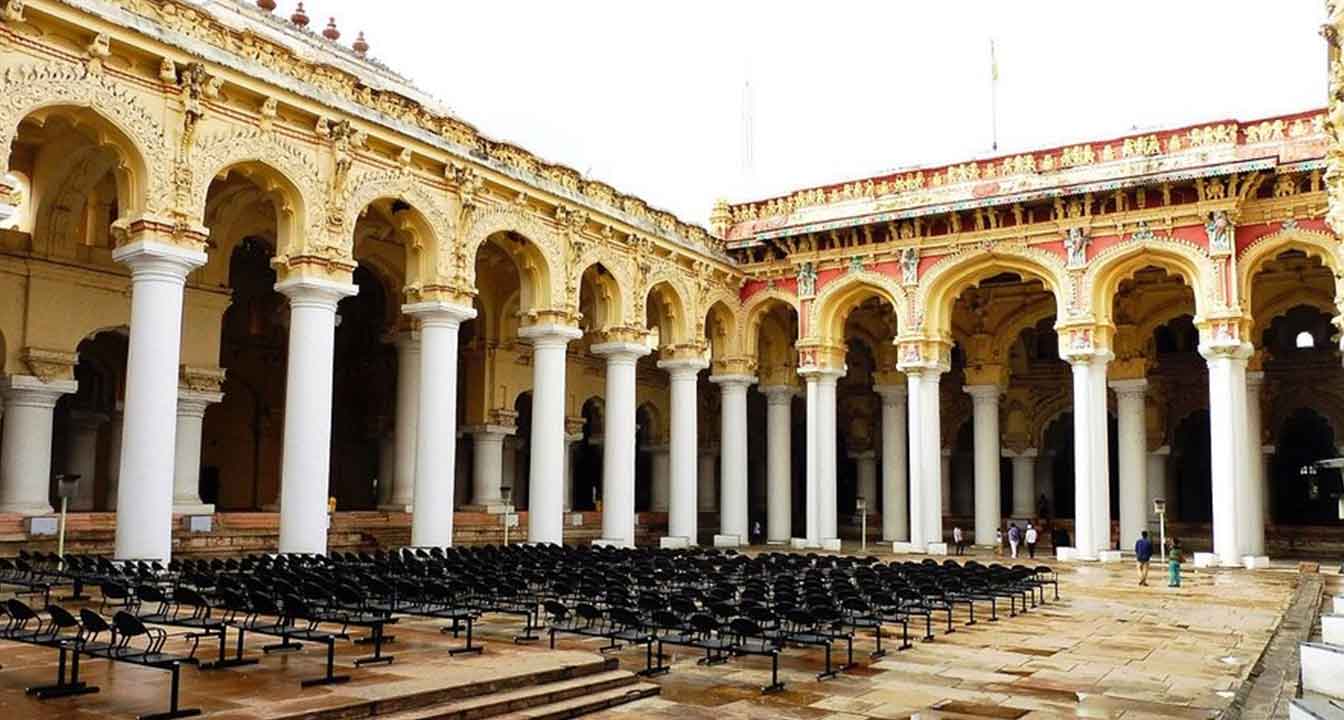
Thirumalai Nayakkar Mahal
Significance: A magnificent 17th-century palace built by King Thirumalai Nayak, it showcases a fusion of Dravidian and Indo-Saracenic architectural styles. Originally four times larger, much of it was dismantled over time.
Key features: The surviving main structure includes the grand courtyard and the dance hall, supported by giant pillars up to 25 meters tall. An evening sound-and-light show reenacts the palace's history.
Note: The glossy texture of the stucco, or chunam, was created by mixing shell lime with egg white.
Kazimar Big Mosque and Maqbara
Significance: The oldest mosque in Madurai, it was built by Kazi Syed Tajuddin, a descendant of the Prophet Muhammad who arrived from Oman in the 13th century. The land was granted by the Pandya king Maravarman Kulasekara I.
Features: It contains the maqbara, or tomb, of the Madurai Hazrats—prominent Sufi saints—and has been managed by Tajuddin's descendants for over 700 years.
Museums and ancient sites
Gandhi Memorial Museum
Significance: Housed in the historic Tamukkam Palace, built by Queen Rani Mangammal around 1670 CE, this museum is one of five Gandhi Sanghralayas (museums) in India.
History: The palace was gifted to the All India Gandhi Smarak Nidhi in 1955. It was inaugurated by Jawaharlal Nehru in 1959.
Collection: The exhibits include a visual biography of Mahatma Gandhi through photos and paintings, a collection of his personal artifacts, and a section on India's freedom movement. A notable item on display is a blood-stained cloth believed to be a replica of one worn by Gandhi at his assassination.
Keeladi excavation site
Significance: This site is an archaeological goldmine, revealing a sophisticated Sangam-era settlement dating back to the 6th century BCE.
Discoveries: Ongoing excavations by the Archaeological Survey of India have unearthed brick walls, drainage systems, pottery, gold ornaments, and evidence of a bustling ancient civilization that flourished on the banks of the Vaigai River.
Samanar Hills
Significance: Located a short distance from the city, these rocky hillocks served as a shelter for Jain monks over 2,000 years ago.
Features: The hills contain ancient caves with rock-cut sculptures and Tamil-Brahmi inscriptions left by the monks. The site also features a beautiful Lotus Temple and offers panoramic views of the surrounding area
kanyakumari historical places
Kanyakumari, a coastal town at the southernmost tip of India, is rich with history, culture, and ancient monuments. Some of its most significant historical places include ancient temples, palaces of the former Travancore kingdom, and memorials dedicated to prominent figures.
Vattakottai Fort
History: Built in the 18th century, this seaside fort was part of the coastal defense system of the erstwhile Travancore kingdom. It was constructed under the supervision of Captain Eustachius De Lannoy, a Dutch naval officer who became commander-in-chief of the Travancore army after being captured.
Significance: The fort offers panoramic views of the sea on one side and the Western Ghats on the other. Historians believe the site was also controlled by the Pandya dynasty due to fish motifs found on its walls.
Features: The fortress, covering 3.5 acres, is made of solid granite blocks and includes watchtowers, weapon rooms, and barracks.
Padmanabhapuram Palace
History: Situated 20 km from Nagercoil, this exquisite wooden palace was the seat of the Travancore rulers until 1795. It was built in 1601 CE and later rebuilt and renamed by King Marthanda Varma in the 18th century.
Significance: The palace is a prime example of traditional Kerala architecture and is maintained by the Government of Kerala, despite being located in Tamil Nadu.
Features: Highlights include a unique black and reflective floor, intricately carved woodwork, colored mica in the windows, and a medicinal wooden bedstead.
Thanumalayan Temple (Suchindram)
History: Located in Suchindram, this sacred site has inscriptions dating to the 9th century, with the current structure and expansions attributed to the Cholas, Nayaks, and Travancore kings.
Significance: It is dedicated to the Hindu trinity of Brahma, Vishnu, and Shiva ("Stanu-mal-ayan") and is a pilgrimage site for both Shaivites and Vaishnavites. The temple was previously under the administration of the Travancore kingdom.
Features: The temple is renowned for its architectural grandeur, including a 134-foot-high gopuram, musical pillars carved from a single stone, and a massive 22-foot-tall Hanuman statue.
Kumari Amman Temple
History: This ancient temple is dedicated to Goddess Kanya Kumari, a form of Devi. It is mentioned in ancient scriptures like the Ramayana and Mahabharata, and is considered one of the 51 Shakti Peethas.
Significance: According to legend, it was built by Lord Parasurama. The temple marks the spot where the goddess performed penance to wed Lord Shiva.
Features: Located on the shoreline, the temple is known for the diamond nose ring of the goddess, which is said to sparkle and be visible from the sea.
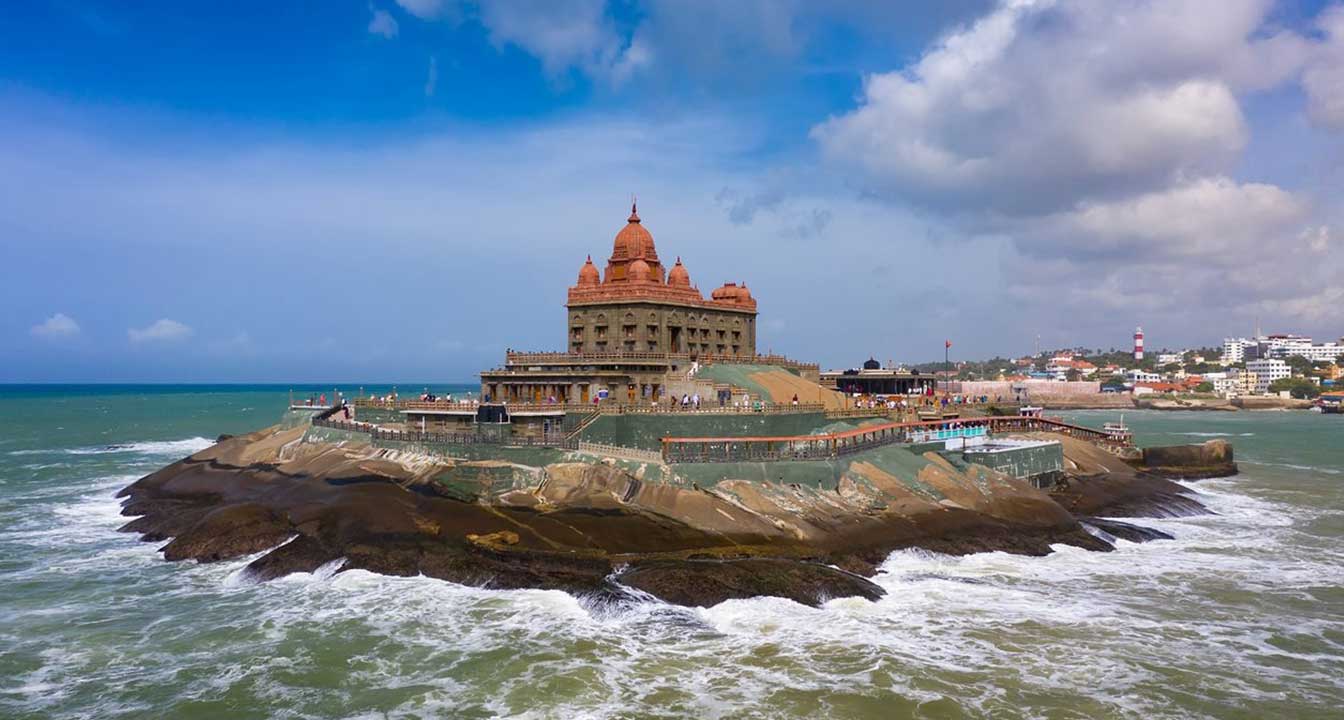
Vivekananda Rock Memorial
History: Built in 1970, this memorial commemorates Swami Vivekananda, who is said to have attained enlightenment while meditating on the rock in December 1892.
Significance: According to local legend, the rock bears the footprints of Goddess Kanya Kumari, making it a sacred site. The memorial project was led by Eknath Ranade and is a symbol of spiritual enlightenment and national pride.
Features: The complex consists of the Vivekananda Mandapam and the Shripada Mandapam, which houses the goddess's footprints. It is accessible by ferry and offers
spectacular views of the confluence of the three seas.
Gandhi Memorial Mandapam
History: This memorial was built on the spot where the urn containing Mahatma Gandhi's ashes was kept before being immersed in the ocean in 1948.
Significance: The memorial's design is a blend of different architectural styles. It is particularly known for a unique feature where sunlight falls directly on the exact spot where the urn was kept on October 2nd, Gandhi's birthday.
Trivandrum
Trivandrum, officially known as Thiruvananthapuram, is the capital city of the Indian state of Kerala, located on the country's southwest coast. The city is recognized for its rich history, culture, and a blend of natural beauty with colonial architecture, featuring prominent sites like the Sree Padmanabhaswamy Temple and the Napier Museum. It serves as a significant cultural and economic hub, with a variety of hospitality services and a tropical climate.
Key Characteristics
Capital of Kerala:Trivandrum is the largest city and capital of the southern Indian state of Kerala. Historical Significance:
The city was once the regional capital of the Travancore royal family, whose palace, Kuthira Malika, can be found here.
Cultural Hub: It is home to numerous art galleries, educational institutions, and major temples, including the Sree Padmanabhaswamy Temple, one of the world's richest temples.
Natural Beauty: The region boasts diverse landscapes, including beaches like Shankumugham Beach and hills with beautiful views.
Notable Attractions
Sree Padmanabhaswamy Temple: A famous and exceptionally wealthy temple dedicated to the deity Lord Ananta.
Napier Museum:A museum known for its British colonial architecture and a collection showcasing Kerala's cultural heritage.
Kuthira Malika (Puthen Malika) Palace: A historic palace adorned with carved horses, displaying artifacts of the Travancore royal family.
Shankumugham Beach: A prominent beach destination within the city.